
What is SI joint pain?
The sacroiliac (SI) joints sit on either side of the lower spine, just below the waist. SI joint pain is often felt on one side of the low back or buttock and can spread into the hip or thigh. Because it can feel like other low back problems or sciatica, the exam includes specific movement tests.
Who this care may be appropriate for
People with one-sided low back or buttock pain, pain when standing up from sitting, or pain climbing stairs. Pregnancy and the months after childbirth can also affect the SI joints.
Common symptoms patients describe
- One-sided low back or buttock pain
- Pain getting out of a car or chair
- Pain with stairs or long walks
Individual results vary. Your care plan depends on your exam and health history.
What to expect
Health history and exam
Dr. Davis reviews your health history and examines the area of concern. Your first visit takes about 30 minutes.
Your options, explained
You hear the exam findings and whether this care is a reasonable option for you. You decide how to proceed.
Treatment options
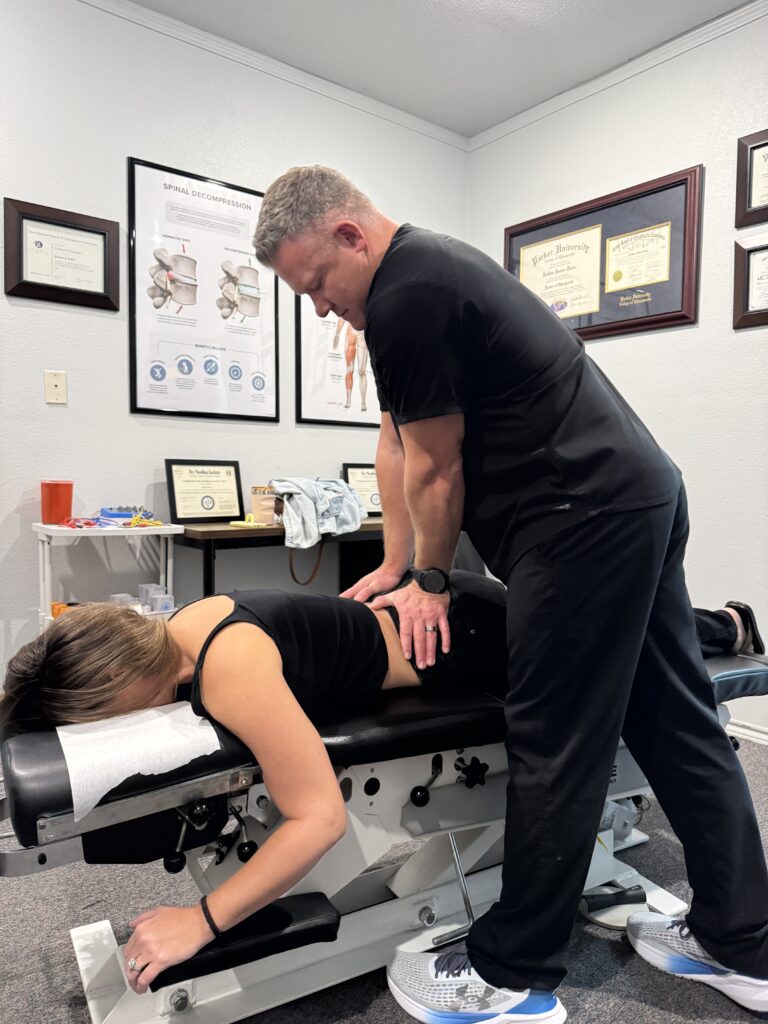
Options may include adjustments to the pelvis and lower spine, dry needling for the surrounding muscles, and guidance on movement.
Follow-up
Dr. Davis checks how you responded and adjusts the plan as needed.
Questions about SI joint pain
How do I know if my pain is from the SI joint?
SI joint pain can be hard to tell apart from other low back problems. Dr. Davis uses your history and specific exam tests to narrow it down.
Can SI joint pain cause leg pain?
It can refer pain into the buttock, hip or thigh. Pain that travels below the knee with numbness or tingling is more often nerve-related, which the exam checks for.
I'm pregnant. Can I be seen?
Yes. Dr. Davis sees patients during pregnancy. Adjustments are adapted for each stage of pregnancy, with positioning and techniques that keep you comfortable and avoid pressure on your belly.

Last reviewed October 2026