
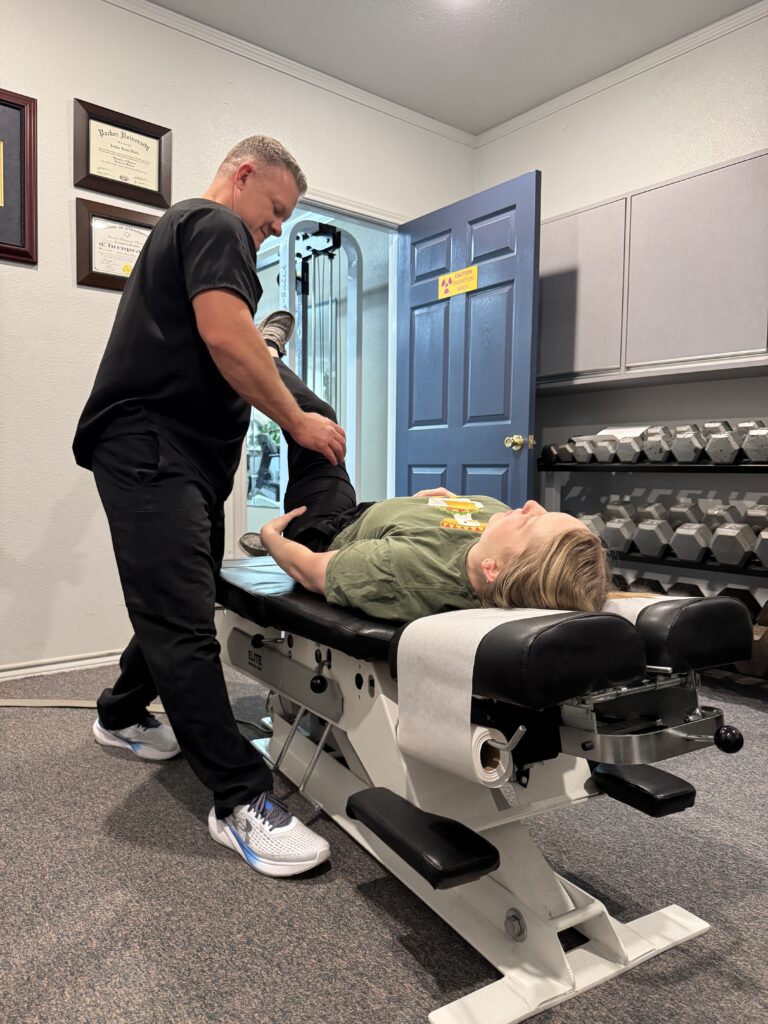
Understanding knee pain
Knee pain is often linked to overuse, the way the kneecap tracks, tight muscles in the thigh and calf, or stiffness in the hip or ankle that changes how the knee is loaded.
Sudden knee injuries with swelling, locking or giving way may involve a ligament or cartilage tear and need a medical evaluation first.
Who this care may be appropriate for
People with knee pain when walking, climbing stairs, squatting, kneeling or running.
Common symptoms patients describe
- Pain going up or down stairs
- Pain around or behind the kneecap
- Knee pain from running or sports
- Knee stiffness after sitting
Individual results vary. Your care plan depends on your exam and health history.
What to expect
Health history and exam
Dr. Davis reviews your health history and examines the area of concern. Your first visit takes about 30 minutes.
Your options, explained
You hear the exam findings and whether this care is a reasonable option for you. You decide how to proceed.
Treatment options
Options may include extremity adjustments for the knee, ankle and hip, dry needling for thigh and calf muscles, and guidance on activity. For sports-related knee pain, see sports injury treatment.
Follow-up
Dr. Davis checks how you responded and adjusts the plan as needed.
Get a medical evaluation first if your knee locks, gives way, swells quickly after an injury, or you can't put weight on it. Seek prompt care for a knee that is hot, red and swollen.
Questions about knee pain
Can a chiropractor help knee pain?
Chiropractors commonly evaluate and treat knee pain, especially when it relates to how the hip, knee and ankle move together. Whether it fits you depends on the cause. Individual results vary.
What about knee arthritis?
Arthritis does not automatically rule out care. Dr. Davis adapts techniques to your situation or refers you if another provider is a better fit.
Why check my hip and ankle for knee pain?
Stiffness above or below the knee can change how it is loaded, so the exam looks at the whole leg.

Last reviewed October 2026