How Dr. Joshua Davis performs adjustments, spinal decompression and dry needling at Davis Chiropractic, and what each one feels like, so you know what to expect before your visit.
Dr. Davis recommends an approach after your exam, and you can always ask questions or request a gentler option. Each treatment is a flat $50.
Approach
How it's done
What it feels like
Often chosen for
By hand, with a quick, controlled movement
Pressure and movement. A popping sound is common.
People comfortable with traditional adjustments
Lighter hand pressure, or a handheld adjusting instrument
Gentle pressure, or a quick tap. Usually no pop.
People who prefer a gentler approach
Lying on a decompression machine that applies slow traction
A gradual, steady stretch
Certain disc-related back problems
Thin needles in tight muscles, with optional mild current through clips on the needles
A brief twitch or ache. Tapping or pulsing with TENS.
Tight muscles and trigger points
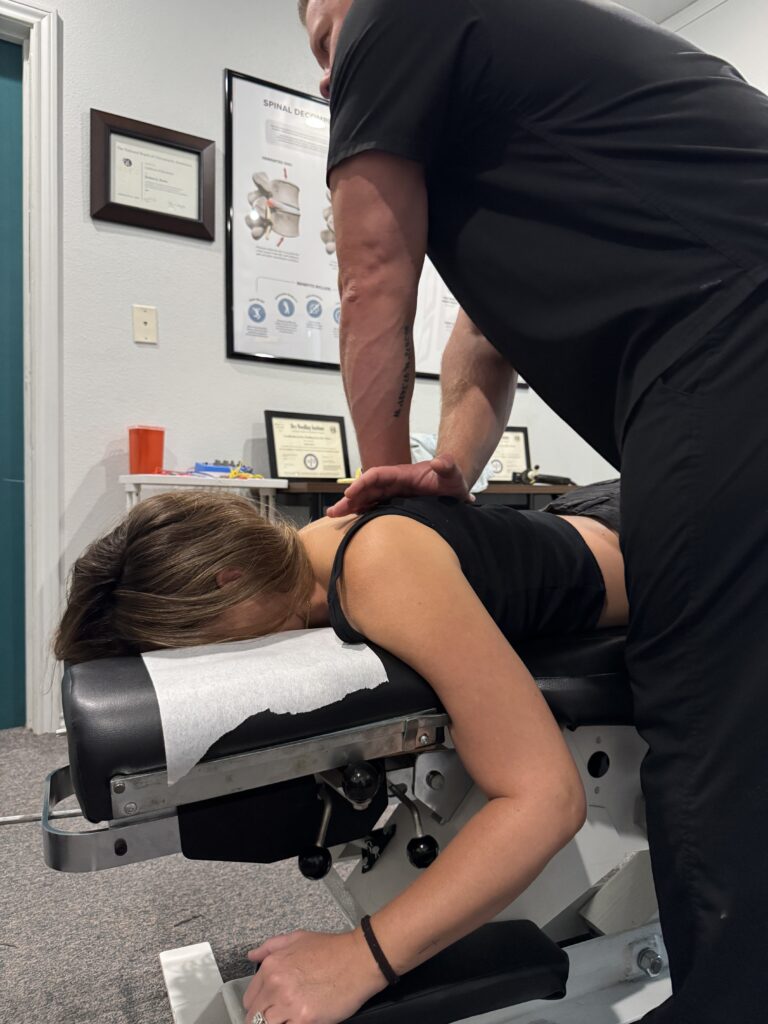
A manual adjustment is the traditional chiropractic adjustment. After your exam, Dr. Davis positions you on the table and applies a quick, controlled movement by hand to a joint that isn't moving well.
You'll feel pressure and a brief movement, and you may hear a popping sound from gas releasing in the joint fluid. Mild soreness for a day or so afterward is fairly common. Manual adjustments are used for the spine and, as extremity adjustments, for joints like the shoulder, knee and ankle.
Chiropractic adjustment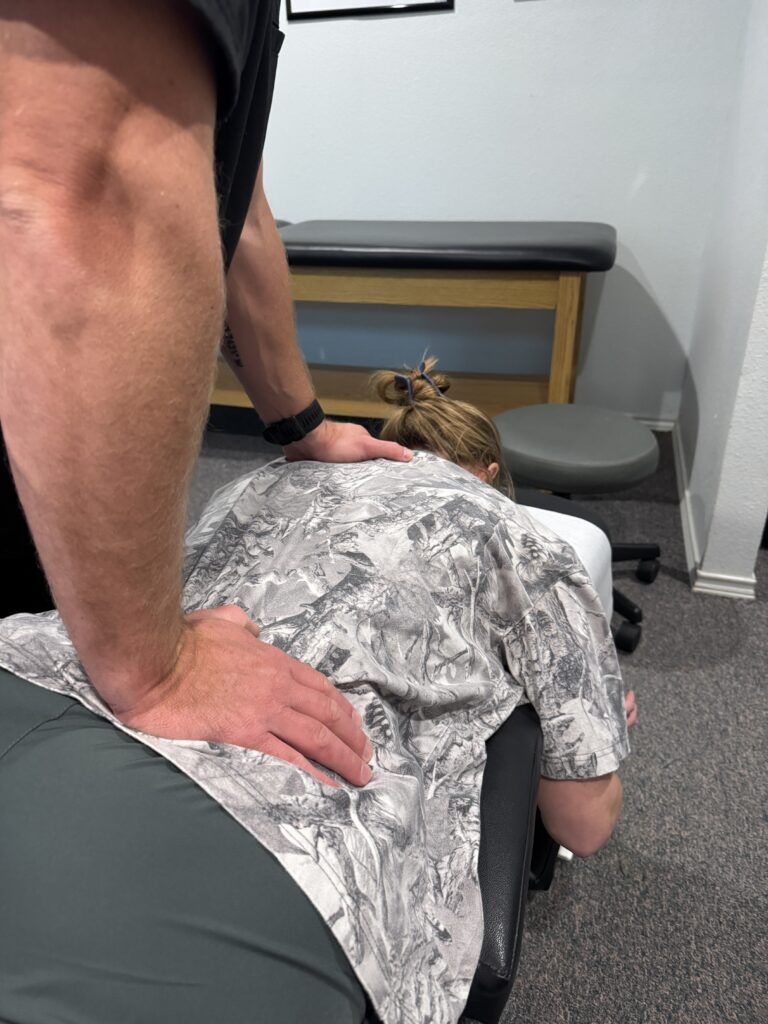
Soft adjustments use less force and no quick thrust or twisting. Dr. Davis uses two soft methods:
Soft adjustments are often chosen by people who feel nervous about being adjusted, older adults, and anyone who prefers no popping.
Gentle chiropractic adjustment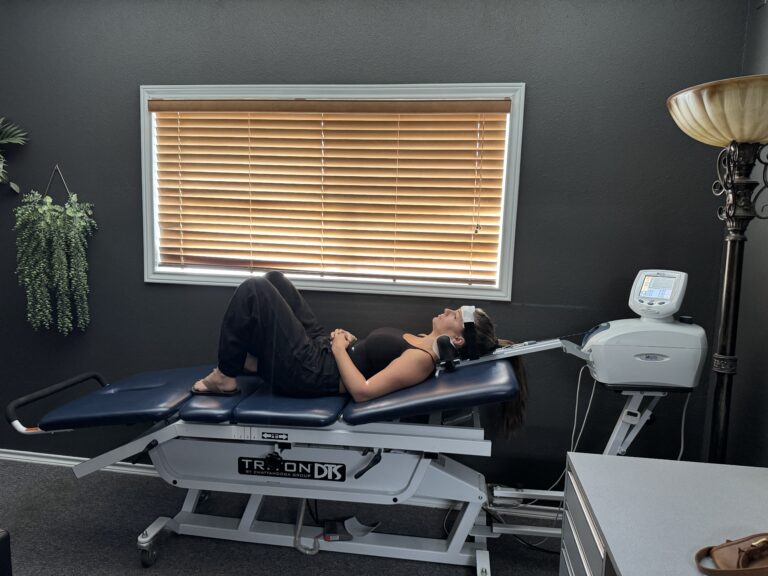
Spinal decompression at Davis Chiropractic is done on a decompression machine. You lie comfortably on the table while the machine applies slow, controlled traction to gently stretch the spine, alternating between gentle pulling and relaxing.
Most people feel a gradual, steady stretch, and some find it relaxing. Tell Dr. Davis right away if anything feels painful.
Spinal decompression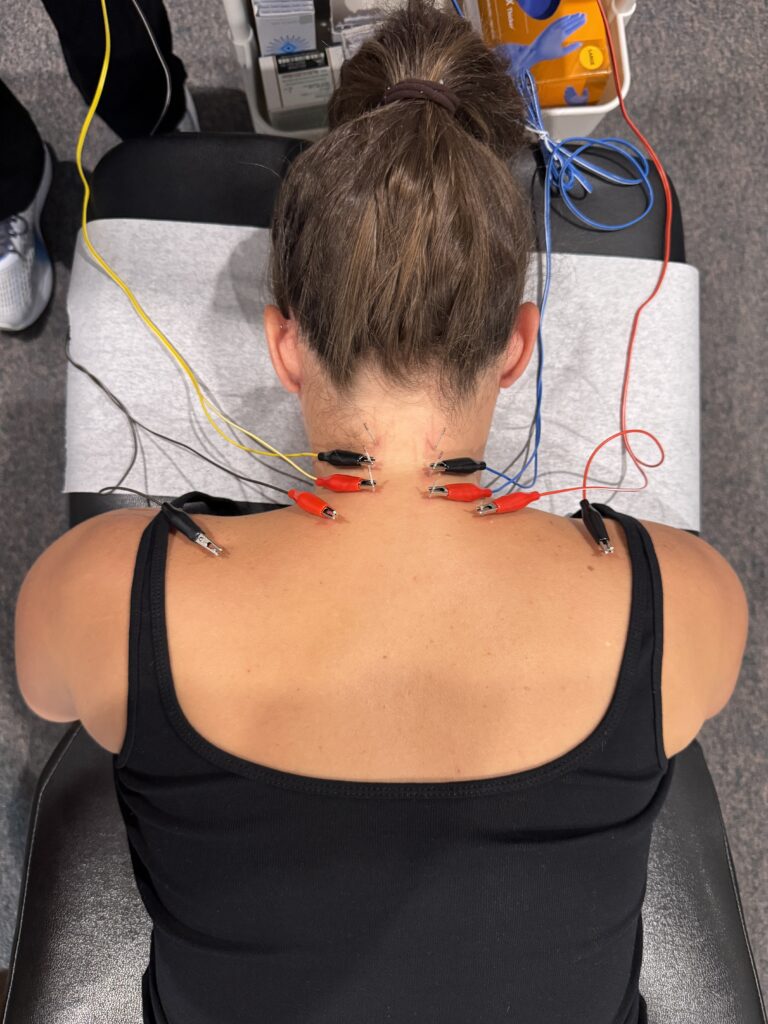
Dr. Davis, who has completed dry needling certification Parts 1 and 2, places very thin, sterile, single-use needles into tight bands of muscle. A brief twitch or dull ache is common.
During some treatments, a TENS unit is clipped to the needles to send a mild electrical current through them. It usually feels like tapping, buzzing or pulsing, and the intensity is kept comfortable. Electrical stimulation isn't used for people with a pacemaker or other implanted electrical device.
Dry needlingThat's what the first visit is for. Dr. Davis will explain the options after your exam, and there's no separate fee for your first visit.