
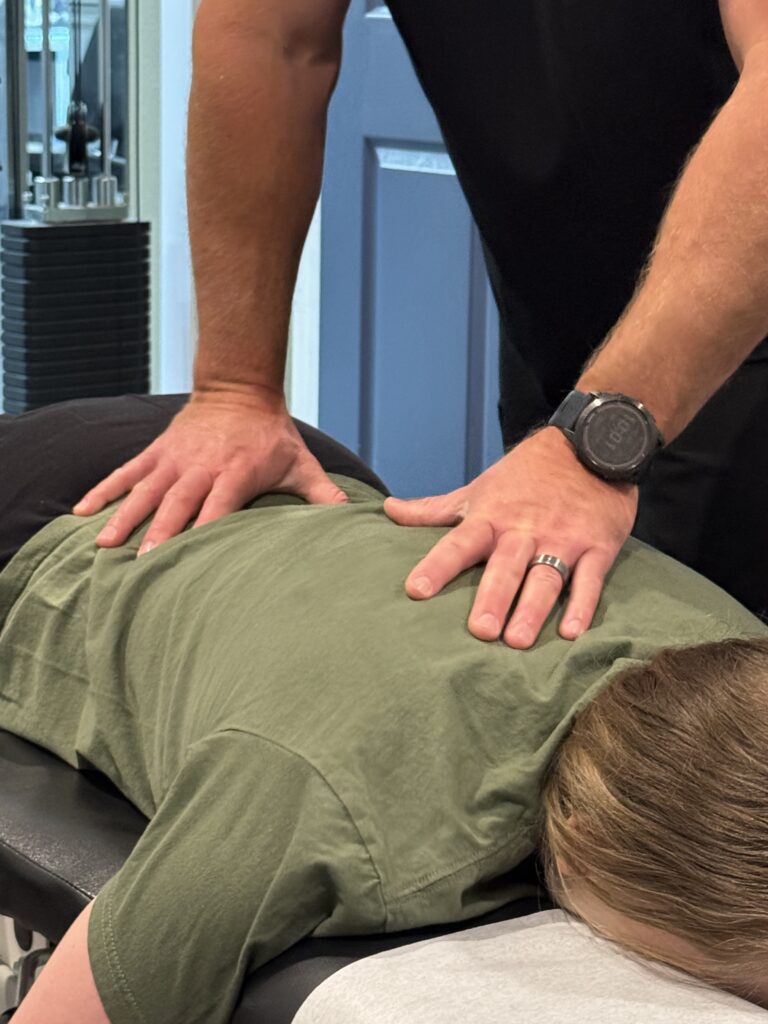
Understanding back pain
Back pain can come from muscles, joints, discs or nerves, and often more than one at once. Most back pain is not caused by a serious condition, but the exam is designed to check for signs that need medical attention.
Upper and mid-back pain, including pain between the shoulder blades, is often linked to posture, long hours at a desk or behind the wheel, stiff joints where the ribs meet the spine, and tight muscles. Low back pain has its own page: lower back pain treatment.
Who this care may be appropriate for
Adults with new or long-standing back pain, stiffness, or pain that makes sitting, sleeping or working harder.
Common symptoms patients describe
- Pain between the shoulder blades
- Upper back tension from desk work or driving
- Back stiffness after sitting
- Back pain that keeps coming back
Individual results vary. Your care plan depends on your exam and health history.
What to expect
Health history and exam
Dr. Davis reviews your health history and examines the area of concern. Your first visit takes about 30 minutes.
Your options, explained
You hear the exam findings and whether this care is a reasonable option for you. You decide how to proceed.
Treatment options
Depending on your exam, treatment options may include chiropractic adjustments, dry needling for tight muscles, spinal decompression for some disc problems, and guidance on movement and posture.
Follow-up
Dr. Davis checks how you responded and adjusts the plan as needed.
Call 911 for back or chest pain with shortness of breath, sweating, nausea, or pain spreading to the arm or jaw. Get medical care right away if back pain comes with loss of bladder or bowel control, numbness in the groin, worsening leg weakness, fever, unexplained weight loss, or follows a serious fall or accident.
Questions about back pain
Should I see a chiropractor or a medical doctor for back pain?
Many people with back pain start with a chiropractor, and many start with a medical doctor. If you have any of the warning signs on this page, see a medical provider first. Dr. Davis will refer you if your exam suggests you need medical care.
What causes pain between the shoulder blades?
Common causes include posture, stiff joints in the mid back, and tight muscles. Pain in this area can occasionally come from organs such as the heart, which is why the warning signs above matter.
Do I need an X-ray first?
Not always. Dr. Davis will tell you if imaging would be useful.

Last reviewed October 2026