
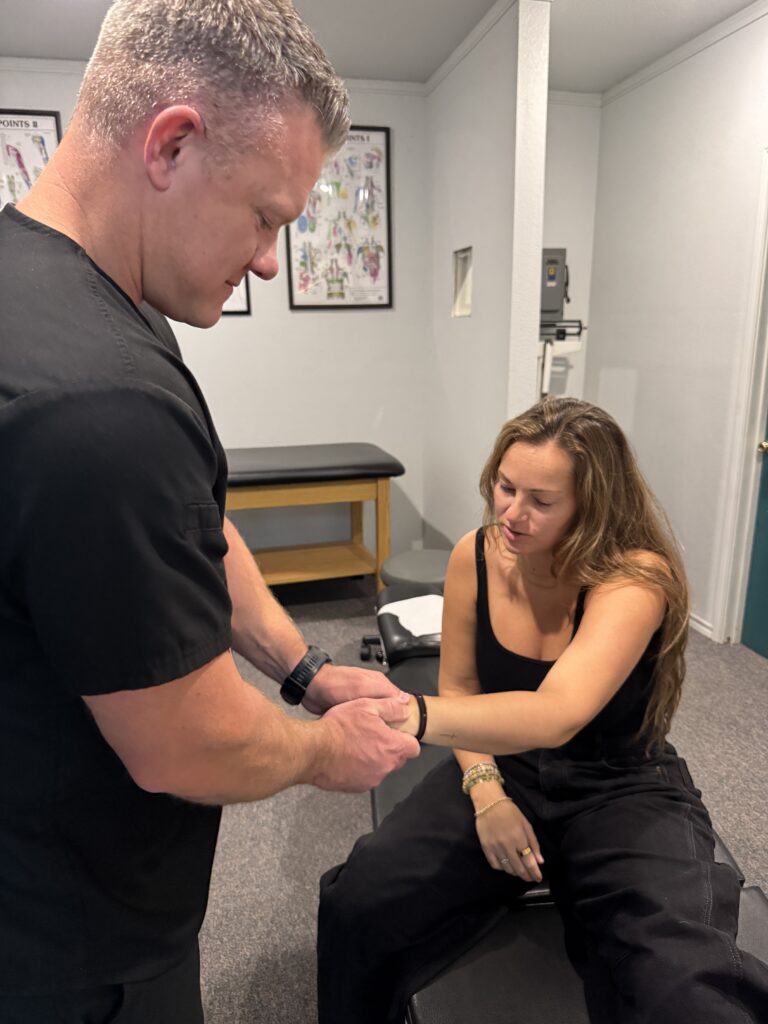
Understanding wrist pain
The wrist is made up of several small bones and joints that work hard during typing, tool use, lifting and pushing. Repetitive use can lead to stiffness and pain.
Tingling or numbness in the hand may involve a nerve at the wrist, such as in carpal tunnel syndrome, or a pinched nerve in the neck. The exam checks for both.
Who this care may be appropriate for
People with wrist pain or stiffness from computer work, tools, lifting, or sports.
Common symptoms patients describe
- Wrist pain with typing or gripping
- Stiffness bending the wrist
- Pain pushing up from a chair
- Tingling in the hand or fingers
Individual results vary. Your care plan depends on your exam and health history.
What to expect
Health history and exam
Dr. Davis reviews your health history and examines the area of concern. Your first visit takes about 30 minutes.
Your options, explained
You hear the exam findings and whether this care is a reasonable option for you. You decide how to proceed.
Treatment options
Options may include extremity adjustments for the wrist and elbow, dry needling for forearm muscles, an evaluation of the neck, and guidance on workstation or task setup.
Follow-up
Dr. Davis checks how you responded and adjusts the plan as needed.
Get an X-ray first if the pain started after a fall onto your hand, especially with swelling or pain over the bones. Seek prompt care for significant hand weakness or numbness that is getting worse.
Questions about wrist pain
Is my wrist pain carpal tunnel?
Tingling in the thumb, index and middle fingers can suggest it, but other problems feel similar. The exam helps narrow it down, and some cases need a physician's care.
Can wrist pain come from the neck?
Hand and wrist symptoms can sometimes come from a nerve in the neck. Dr. Davis checks both.
Do I need a wrist brace?
Dr. Davis can discuss whether support might help your situation.

Last reviewed October 2026