
What is a lumbar disc herniation?
Spinal discs sit between the vertebrae and act as cushions. In the lower (lumbar) spine, a herniated disc can cause local back pain, and if it presses on a nerve root, pain, tingling or numbness may travel into the buttock and leg, often called sciatica.
Symptoms often worsen with sitting, bending or coughing. Many lumbar disc herniations improve over time with non-surgical care, though some need medical or surgical evaluation.
Who this care may be appropriate for
People diagnosed with a lumbar disc herniation, or with low back pain plus leg symptoms that suggest one.
Common symptoms patients describe
- Low back pain with pain into one leg
- Leg tingling or numbness
- Pain that worsens with sitting or bending
- An MRI that showed a disc problem
Individual results vary. Your care plan depends on your exam and health history.
What to expect
Health history and exam
Dr. Davis reviews your health history and examines the area of concern. Your first visit takes about 30 minutes.
Your options, explained
You hear the exam findings and whether this care is a reasonable option for you. You decide how to proceed.
Treatment options
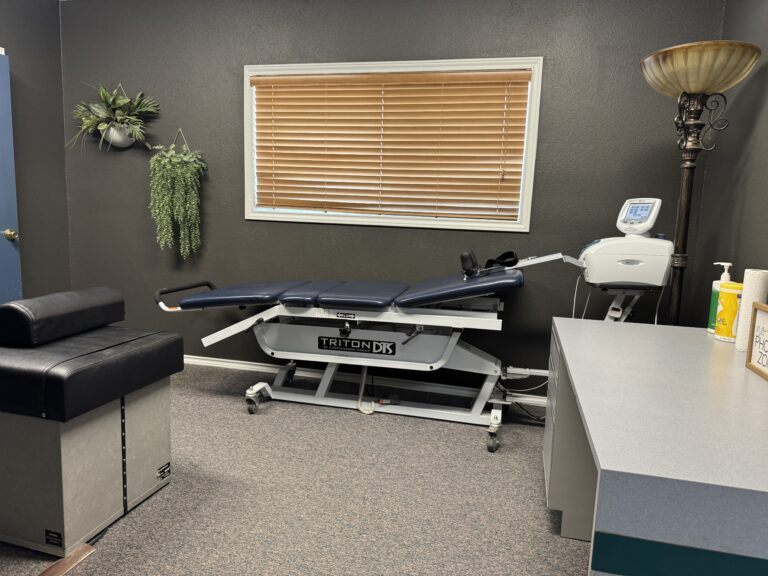
Care is based on your exam and any imaging you choose to share. Options may include spinal decompression, gentle adjustments suited to disc problems, and guidance on movement. Dr. Davis may coordinate with your physician or recommend a specialist when needed.
Follow-up
Dr. Davis checks how you responded and adjusts the plan as needed.
Get medical care right away if back or leg pain comes with loss of bladder or bowel control, numbness in the groin or inner thighs, leg weakness that is getting worse, fever, unexplained weight loss, or follows a serious fall or accident.
Questions about lumbar disc herniation
Can you adjust someone with a herniated disc?
Sometimes, with appropriate techniques. Dr. Davis chooses methods based on your exam and imaging, and may use gentler approaches or decompression instead.
Do I need to bring my MRI?
It isn't required, but if you already have an MRI report, sharing it helps Dr. Davis understand your history.
Will I need surgery?
Many people with lumbar disc herniations do not need surgery, but some do. If your exam suggests a surgical evaluation is appropriate, Dr. Davis will refer you.

Last reviewed October 2026