
Understanding headaches and migraines
Headaches have many causes. Some start in the neck, sometimes called cervicogenic headaches, and some are tension-type headaches linked to tight neck and shoulder muscles.
Migraines are a neurological condition. Chiropractic care is not a replacement for medical migraine care, but some people use it alongside their physician's treatment, especially when neck tension seems to be a trigger.
Who this care may be appropriate for
People with headaches that seem linked to neck stiffness or posture, or migraines that coincide with neck and shoulder tension.
Common symptoms patients describe
- Headaches that start at the base of the skull
- Headaches with neck stiffness
- Migraines where neck tension seems to be a trigger
Individual results vary. Your care plan depends on your exam and health history.
What to expect
Health history and exam
Dr. Davis reviews your health history and examines the area of concern. Your first visit takes about 30 minutes.
Your options, explained
You hear the exam findings and whether this care is a reasonable option for you. You decide how to proceed.
Treatment options
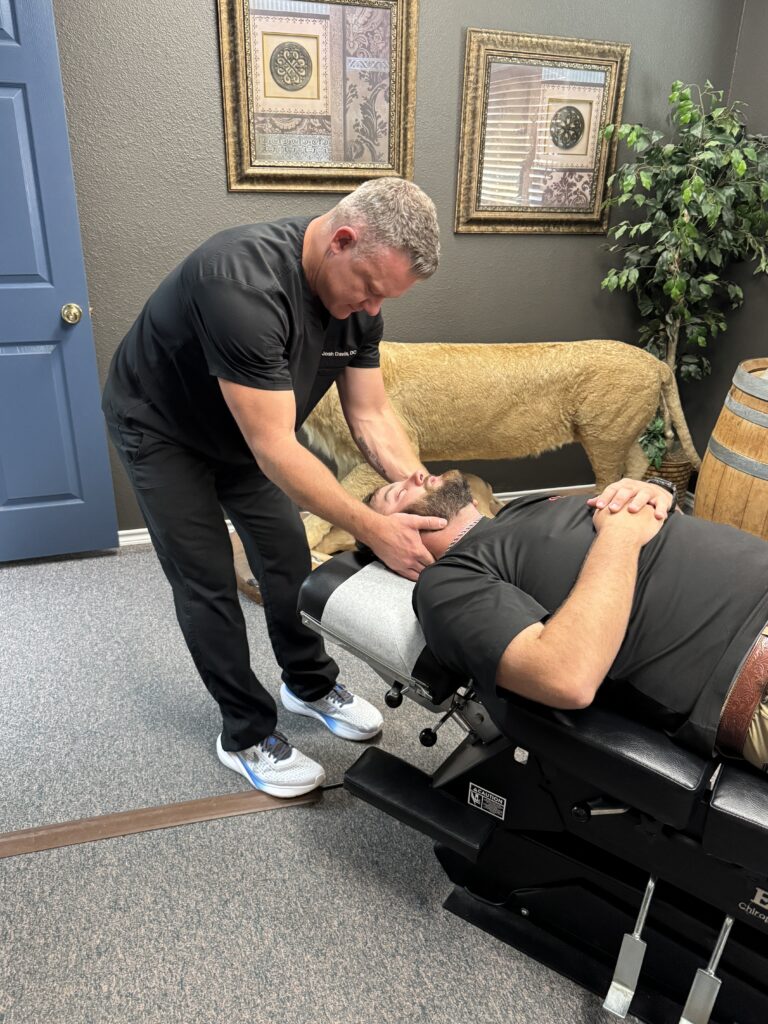
Depending on your exam, care may include gentle neck and upper back adjustments, dry needling for tight muscles, and guidance on posture and daily habits.
Follow-up
Dr. Davis checks how you responded and adjusts the plan as needed.
Call 911 or go to an emergency room for a sudden, severe headache (often described as the worst of your life), or a headache with confusion, weakness, numbness, trouble speaking, vision loss, fever with a stiff neck, or after a head injury.
Questions about headache and migraine
Should I stop my migraine medication?
No. Don't change any medication without talking to the provider who prescribed it.
What should I track before my visit?
If you can, note how often headaches happen, how long they last, where you feel them, and anything that seems to trigger them.
Is my headache a tension headache or a migraine?
They can overlap. Migraines are often throbbing, with nausea or sensitivity to light. Tension headaches usually feel like steady pressure. Your physician can diagnose migraines.

Last reviewed October 2026