
What is sciatica?
Sciatica describes a pattern of symptoms rather than a single diagnosis. It is often caused by irritation of a nerve root in the lower back, for example from a lumbar disc herniation or narrowing around the nerve. Symptoms can include pain, burning, tingling or numbness down one leg.
Some buttock and leg pain that feels like sciatica comes from the SI joint or tight hip muscles instead, which is why the exam matters.
Who this care may be appropriate for
People with pain, tingling or numbness that runs from the low back or buttock into the leg.
Common symptoms patients describe
- Pain down the back of one leg
- Leg pain that worsens with sitting
- Tingling or numbness in the leg or foot
- Low back pain with leg symptoms
Individual results vary. Your care plan depends on your exam and health history.
What to expect
Health history and exam
Dr. Davis reviews your health history and examines the area of concern. Your first visit takes about 30 minutes.
Your options, explained
You hear the exam findings and whether this care is a reasonable option for you. You decide how to proceed.
Treatment options
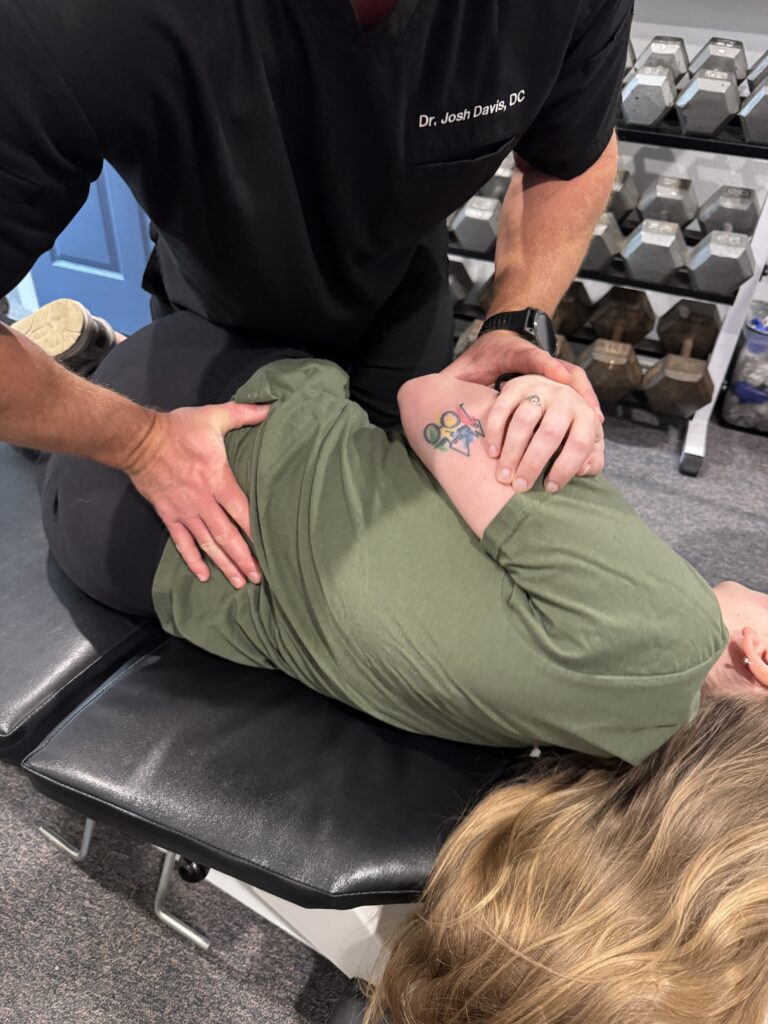
After the exam, options may include chiropractic adjustments, spinal decompression and guidance on positions and activity. Dr. Davis may recommend imaging or coordinate with your physician depending on your symptoms.
Follow-up
Dr. Davis checks how you responded and adjusts the plan as needed.
Get medical care right away if back or leg pain comes with loss of bladder or bowel control, numbness in the groin or inner thighs, leg weakness that is getting worse, fever, unexplained weight loss, or follows a serious fall or accident.
Questions about sciatica
Can a chiropractor help with sciatica?
Chiropractic care is one of several non-surgical options commonly used for sciatica. Whether it fits your situation depends on the cause, which the exam helps identify. Individual results vary.
Should I stay in bed?
Long periods of bed rest are generally not recommended for sciatica. Dr. Davis will suggest activity levels that suit your symptoms.
Will I need an MRI?
Not always. Imaging is usually reserved for severe or worsening symptoms, or when it would change the treatment plan.

Last reviewed October 2026