What is a cervical disc herniation?
The cervical spine is the neck. A herniated disc here can cause neck pain, and if it presses on a nerve root, pain, tingling, numbness or weakness may travel into the shoulder blade, arm or hand on one side.
Symptoms sometimes ease when the arm is raised over the head and worsen with certain neck positions. Many cervical disc herniations improve with non-surgical care, though some need medical or surgical evaluation.
Who this care may be appropriate for
People diagnosed with a cervical disc herniation, or with neck pain plus arm symptoms that suggest one.
Common symptoms patients describe
- Neck pain with pain into one arm
- Tingling or numbness in the hand or fingers
- Weaker grip on one side
- An MRI that showed a disc problem in the neck
Individual results vary. Your care plan depends on your exam and health history.
What to expect
Health history and exam
Dr. Davis reviews your health history and examines the area of concern. Your first visit takes about 30 minutes.
Your options, explained
You hear the exam findings and whether this care is a reasonable option for you. You decide how to proceed.
Treatment options
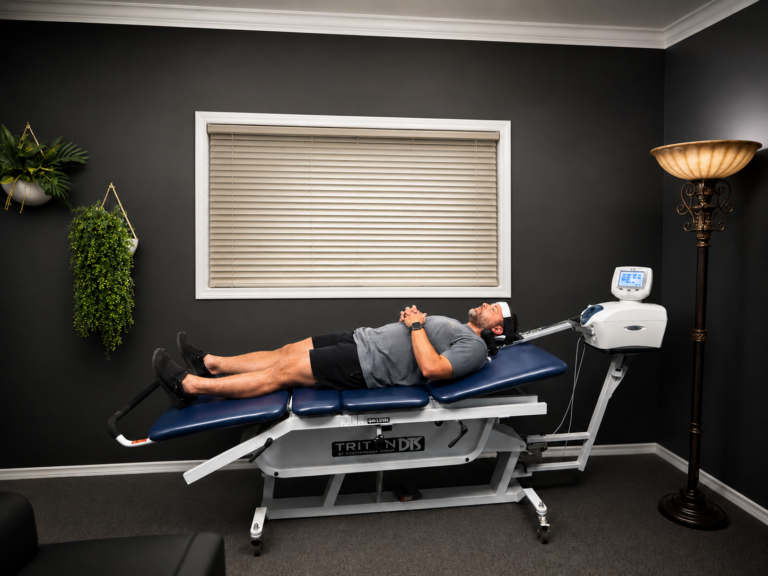
Because the neck is involved, care usually starts with gentle, low-force approaches rather than quick thrusts, along with dry needling for tight neck and shoulder muscles and guidance on positions. Dr. Davis may coordinate with your physician or recommend a specialist when needed.
Follow-up
Dr. Davis checks how you responded and adjusts the plan as needed.
Seek urgent medical care for weakness that is getting worse, symptoms in both arms, clumsy hands, trouble with balance or walking, or loss of bladder or bowel control.
Questions about cervical disc herniation
Will my neck be cracked?
Not necessarily. With a disc herniation, Dr. Davis often uses gentle approaches. You can always ask for a softer option.
Do I need to bring my MRI?
It isn't required, but if you have an MRI report, sharing it helps Dr. Davis understand your history.
Will I need surgery?
Many people with cervical disc herniations do not need surgery, but some do. If your exam suggests a surgical evaluation is appropriate, Dr. Davis will refer you.

Last reviewed October 2026