
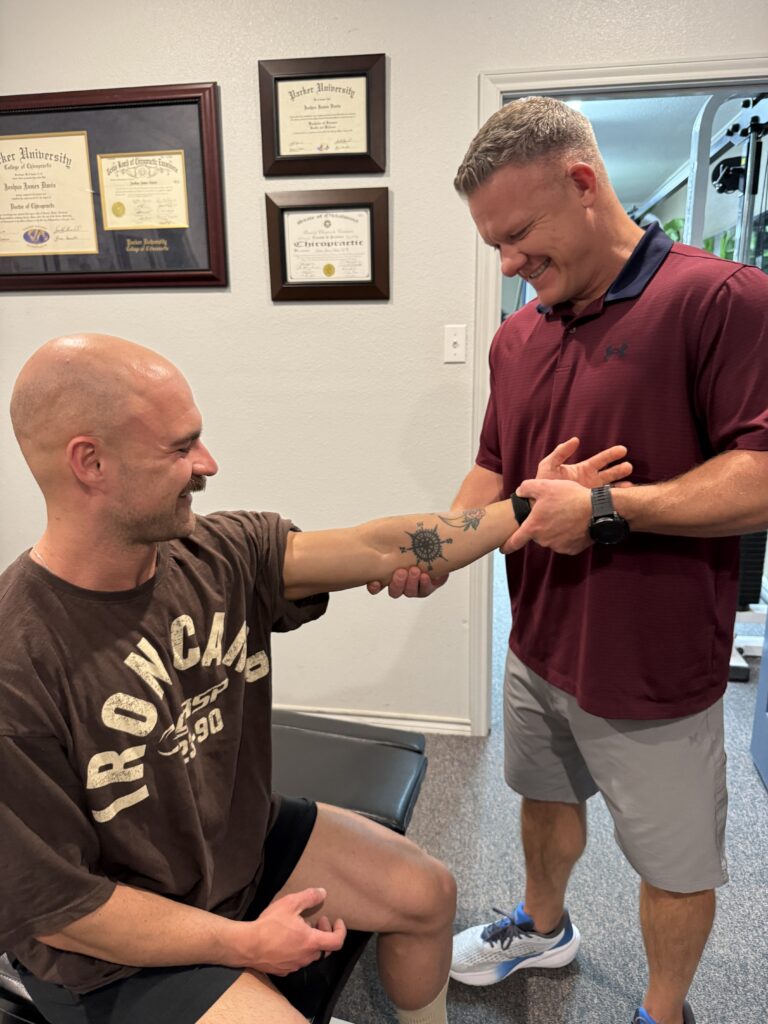
Understanding elbow pain
Pain on the outside or inside of the elbow is often linked to repeated gripping, lifting or tool use, and is commonly called tennis elbow or golfer's elbow. Despite the names, it's more often caused by work and household tasks than sports.
Tingling into the hand can involve a nerve at the elbow or in the neck, which the exam helps sort out.
Who this care may be appropriate for
People with elbow pain from gripping, lifting, typing, tools, or racket and throwing sports.
Common symptoms patients describe
- Pain on the outside or inside of the elbow
- Pain when gripping or shaking hands
- Forearm tightness
- Elbow pain from repetitive work
Individual results vary. Your care plan depends on your exam and health history.
What to expect
Health history and exam
Dr. Davis reviews your health history and examines the area of concern. Your first visit takes about 30 minutes.
Your options, explained
You hear the exam findings and whether this care is a reasonable option for you. You decide how to proceed.
Treatment options
Options may include extremity adjustments for the elbow and wrist, dry needling for tight forearm muscles, a check of the neck, and guidance on modifying aggravating tasks.
Follow-up
Dr. Davis checks how you responded and adjusts the plan as needed.
Get medical care promptly after a fall if the elbow looks deformed, you can't bend or straighten it, or it is hot, red and swollen.
Questions about elbow pain
Do I have tennis elbow?
Pain on the outside of the elbow with gripping is a common sign, but the exam is needed to confirm the source.
Can dry needling help elbow pain?
Dry needling is commonly used for tight forearm muscles. Whether it fits you is decided after the exam. Individual results vary.
Should I stop using my arm?
Usually not completely. Dr. Davis can suggest ways to reduce strain while staying active.

Last reviewed October 2026