
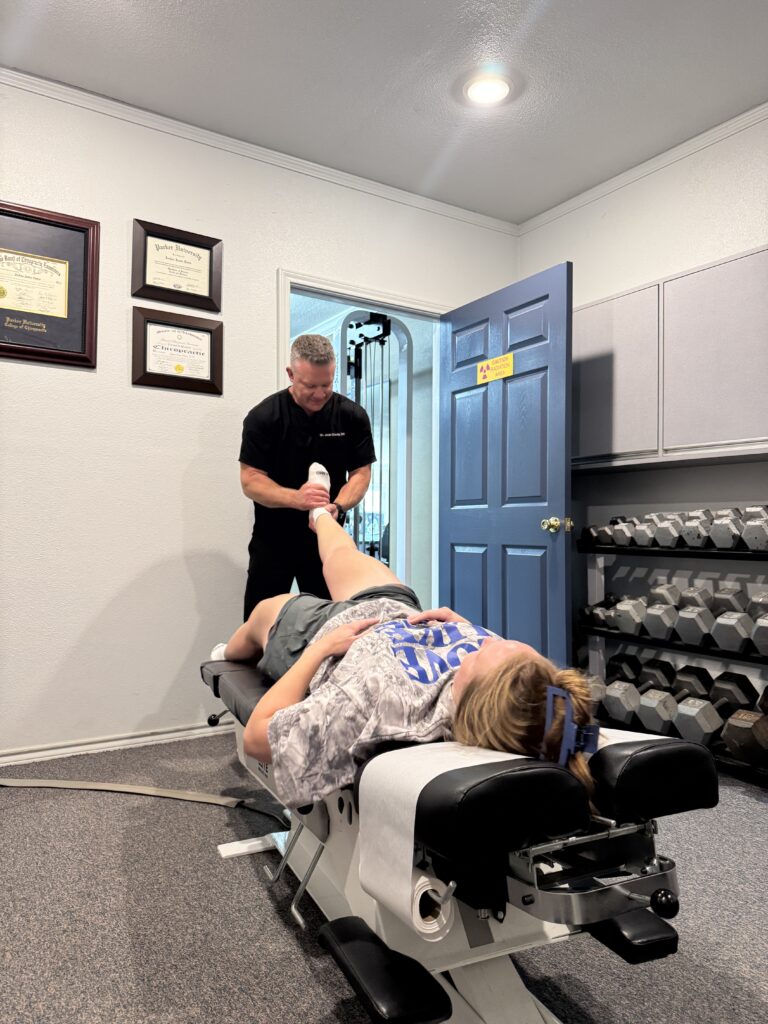
Understanding ankle pain
Ankle sprains are common, and some people are left with stiffness, weakness or repeat sprains long after the original injury. Tight calf muscles and a stiff ankle can also affect the foot, knee and hip.
Who this care may be appropriate for
People with ankle stiffness, pain after a past sprain, or ankle pain from running, sports or standing work.
Common symptoms patients describe
- Stiffness after an old sprain
- Ankle pain with walking or running
- Tight calves
- Repeated ankle sprains
Individual results vary. Your care plan depends on your exam and health history.
What to expect
Health history and exam
Dr. Davis reviews your health history and examines the area of concern. Your first visit takes about 30 minutes.
Your options, explained
You hear the exam findings and whether this care is a reasonable option for you. You decide how to proceed.
Treatment options
Options may include extremity adjustments for the ankle and foot, dry needling for calf muscles, and guidance on activity and balance.
Follow-up
Dr. Davis checks how you responded and adjusts the plan as needed.
Get an X-ray first after an injury if you can't take four steps on the ankle, or if there is pain directly over the ankle bones. Seek prompt care for a hot, red, swollen ankle.
Questions about ankle pain
Can you treat a sprained ankle?
Once a recent injury has been checked for a fracture, chiropractic care may help with stiffness and recovery. Dr. Davis will tell you if imaging is needed first.
Why does my ankle still hurt months after a sprain?
Lingering stiffness and weakness are common after sprains. The exam looks at how the ankle and surrounding joints are moving.
Does ankle stiffness affect my knee?
It can. A stiff ankle changes how load passes through the knee and hip.

Last reviewed October 2026